

share to:


The new Huanggang Checkpoint, the only 24-hour land border crossing between Shenzhen and Hong Kong, is expected to officially open in July.
This follows an extensive demolition and reconstruction project at the site of the original terminal in Futian District.
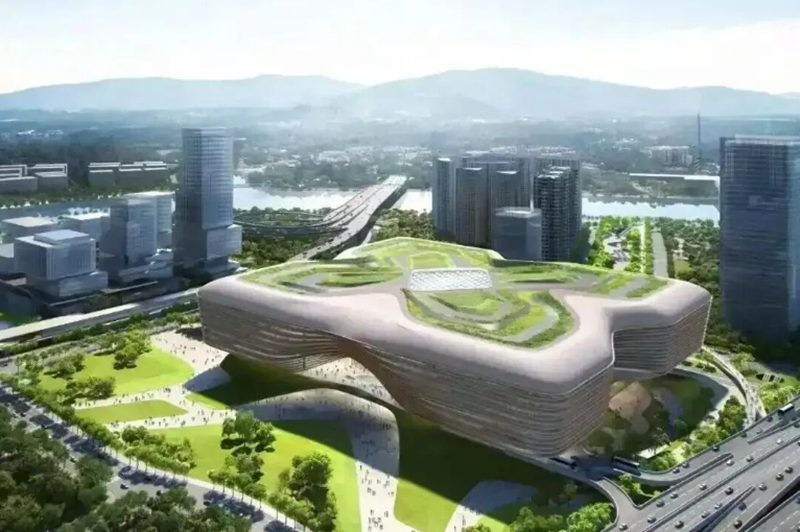
A computer-generated image of the new Huanggang Checkpoint terminal building. File photo
The main terminal building is now complete, and technical teams are currently fine-tuning and debugging advanced customs clearance systems to ensure a smooth transition.
Upon its debut, the new Huanggang Checkpoint will become the largest land border crossing in the world. A major highlight of the project is the implementation of a streamlined process, which replaces the traditional system of queuing twice, allowing travelers to clear both jurisdictions at a single point.
Equipped with 134 automated channels and 68 staffed counters, the facility is designed to handle a daily average of 200,000 travelers, with a peak capacity of 300,000. These upgrades are projected to slash average clearance times from 30 minutes to just five.
Spanning a massive construction area of 689,700 square meters, the terminal serves as more than just an immigration gateway. It is envisioned as a three-dimensional integrated transportation hub and a vibrant urban public space.
Strategically positioned, the checkpoint connects the Shenzhen Bay Super Headquarters Base, the Guangming Science City, and the Bao'an International Airport, effectively linking the entire Guangzhou-Shenzhen-Hong Kong technology corridor.
The checkpoint is slated to integrate five major rail lines, including Shenzhen Metro's Line 7 and the planned Northern Link Spur Line in Hong Kong.
It will also serve as a node for the Guangzhou-Dongguan-Shenzhen Intercity Railway (Qianhai-Huanggang section) currently under construction, the Shenzhen-Guangzhou Central Axis Intercity Railway, and Shenzhen Metro's Line 20.
This extensive transit network is set to significantly enhance travel convenience and connectivity for residents across the Guangdong-Hong Kong-Macao Greater Bay Area.


