

share to:


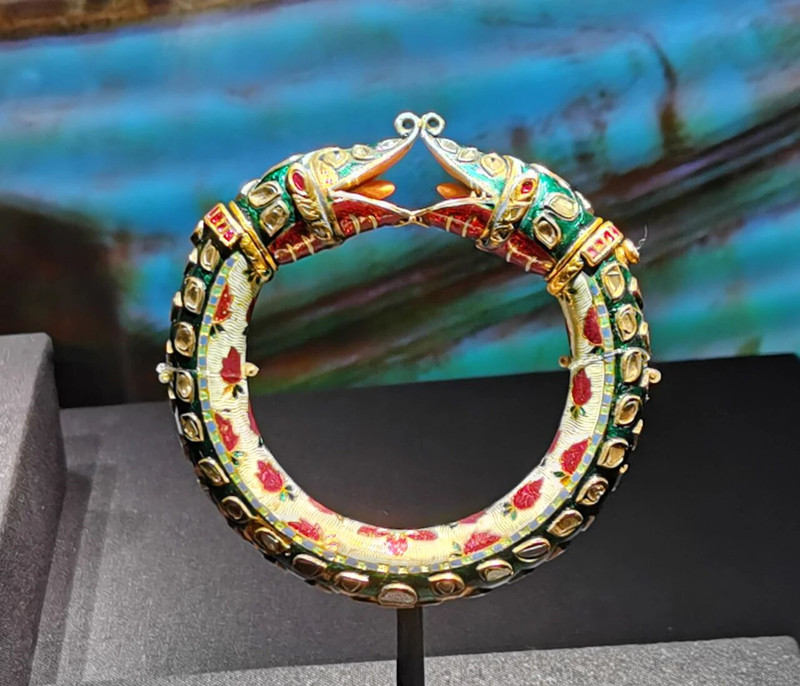
A 17th-century gold and enamel bracelet set with diamonds and rubies from the Mughal Empire is on display at the “Blossoms and Blades” exhibition at Shenzhen Museum’s history and folk culture division. Photos by Cao Zhen
Daggers and bracelets set with rubies, emeralds, and diamonds. Luminous rock crystal, intricately carved jade, and a gold coin as large as a plate. These are among the dazzling objects on display in “Blossoms and Blades: Treasures of the Mughal Court in 16-19 Centuries” at Shenzhen Museum’s history and folk culture division.
The Mughal dynasty, one of the world’s most influential dynasties from the 16th to the 19th centuries, ushered in a golden age of cultural and artistic achievement in South Asia.
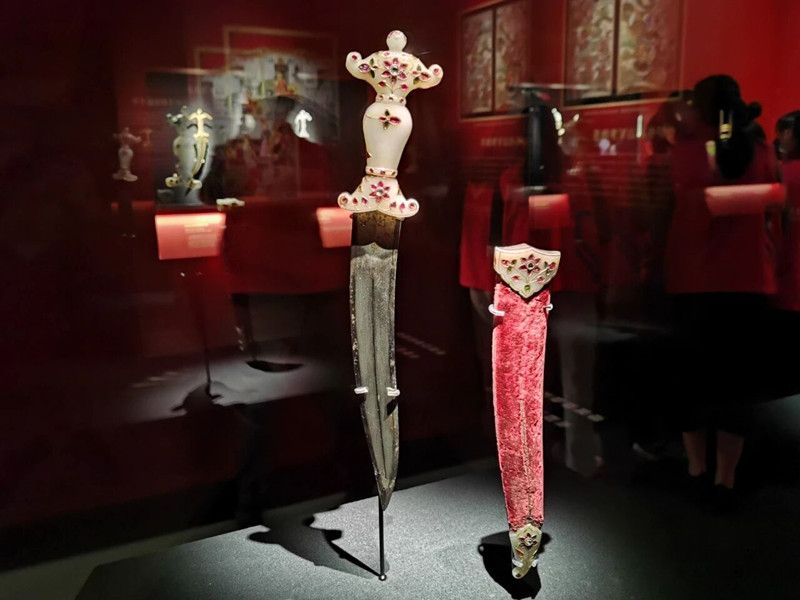
A dagger and its sheath set with gemstones.
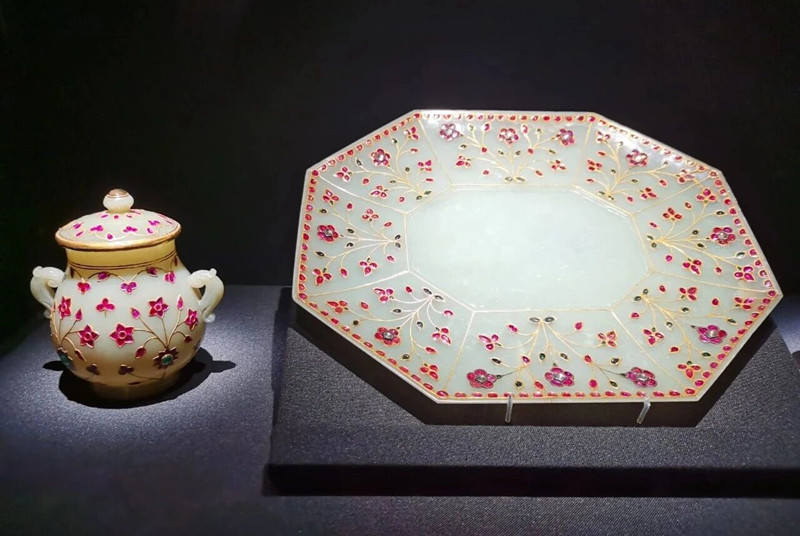
Jade items inlaid with gemstones.
Positioned at the crossroads of the ancient Silk Road, the empire fostered exchanges between East and West. A rich fusion of Islamic and local Indian traditions produced extraordinary works across architecture, jewelry, textiles, miniature painting, and other arts — treasures celebrated in South Asia and around the world.
Mughal court art flourished, characterized by its diversity and inclusivity. Fueled by emperors passionate about the arts, the court absorbed influences from South Asia, China, Iran, Europe and beyond, producing a distinctive Mughal style that has left a lasting legacy.
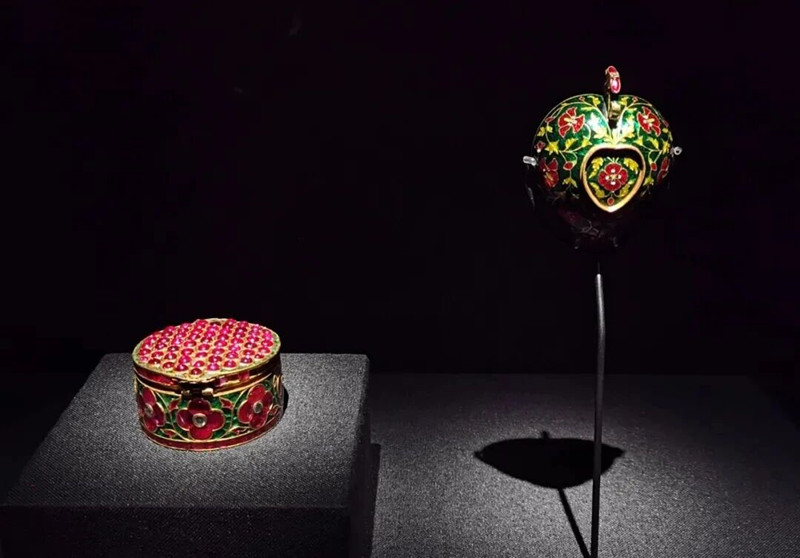
Objects set with various gemstones.
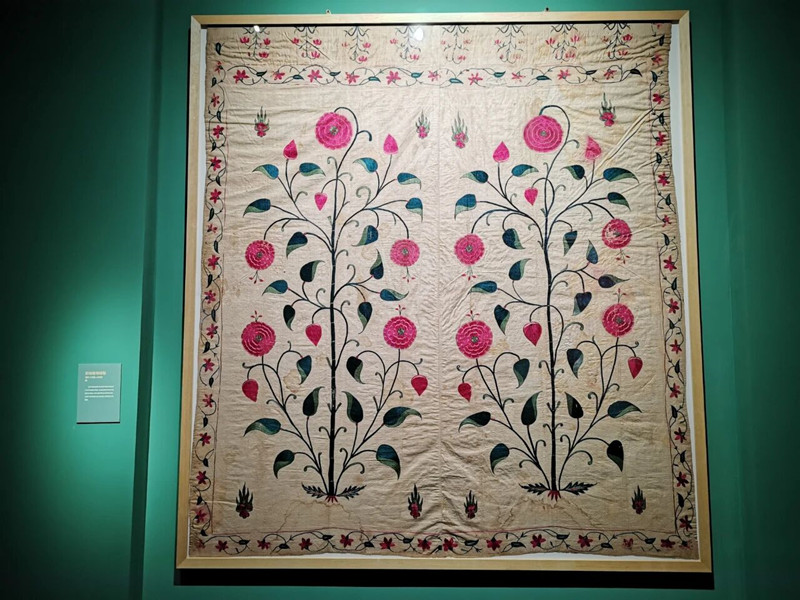
An 18th-century tapestry.
Hosted by Shenzhen Museum, with support from Art Exhibitions China and The al-Sabah Collection / Dar al-Athar al-Islamiyyah, Kuwait, the exhibition presents nearly 200 exceptional Mughal artifacts, all of which are being shown on the Chinese mainland for the first time.
The exhibition explores Mughal history, court life, and artistic practice: from weapons and ceremonial objects that signified power and ritual, to intricate miniature paintings that depict daily and courtly life, and carpets that reflect exotic aesthetics. These pieces not only reveal exceptional craftsmanship and artistic vision but also testify to the blending of diverse civilizations.
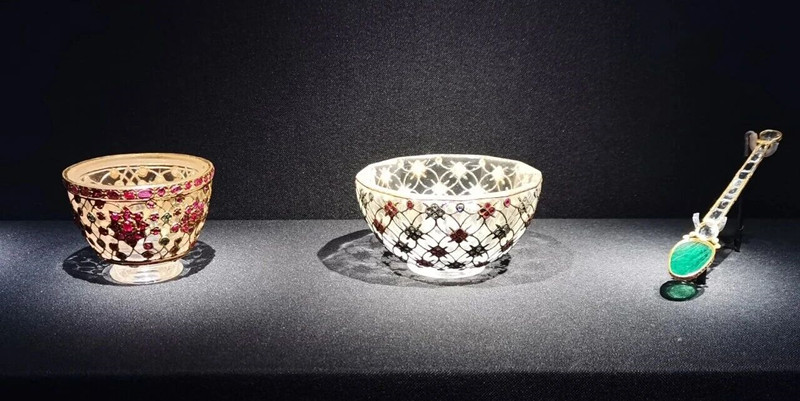
Rock-crystal cups and a gold spoon inlaid with gemstones.
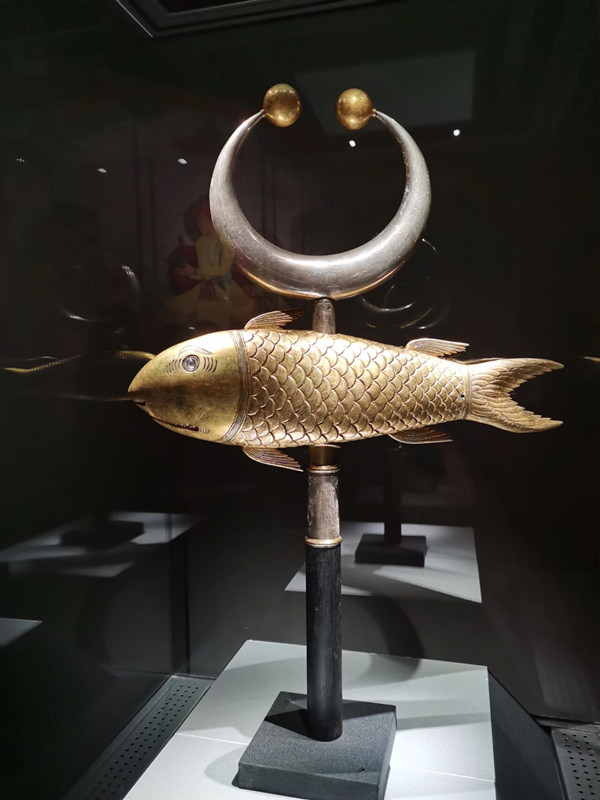
A 17th-century scepter head.
The exhibition walls are decorated with enlarged reproductions of Mughal miniature paintings; their vibrant scenes help create an immersive atmosphere evocative of the opulent Mughal court.
Visitors can also buy souvenirs at the museum shop, such as chocolates and nuts, tea and drip coffee, necklaces, earrings, and rings, refrigerator magnets, bookmarks, toys, and more.
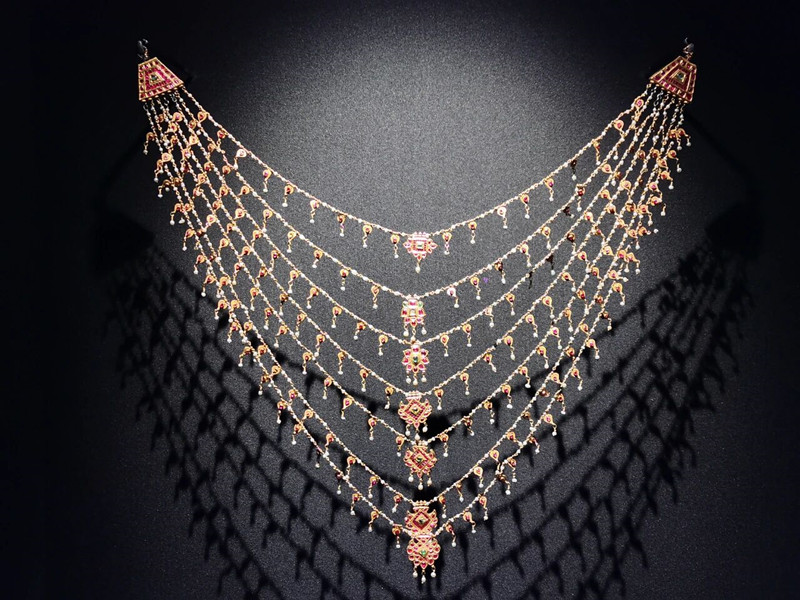
A 17th-century gold necklace set with gemstones.
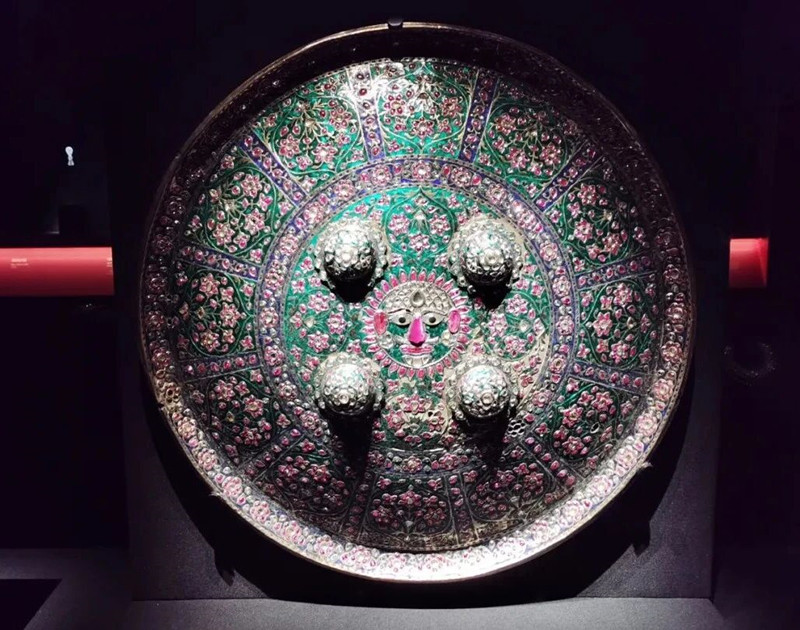
A 19th-century shield inlaid with various gemstones.
Dates: Through April 6, 2026
Hours: 10 a.m.-6 p.m., closed Mondays
Tickets: 78 yuan (various discounts available)
Venue: Shenzhen Museum’s history and folk culture division, Jintian Road, Futian District 深圳博物馆金田路馆(历史民俗)
Metro: Line 2 or 4 to Civic Center Station (市民中心站), Exit B
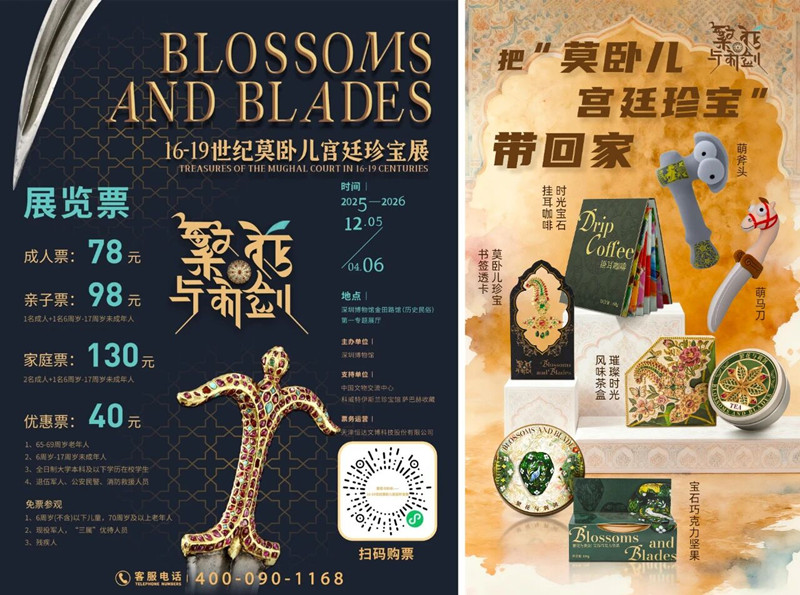
Scan the code to buy the exhibition tickets.
Exhibitions at Shenzhen Museum’s ancient art division
A new exhibition presents 101 exquisite hand-painted reproductions of masterpieces from the Palace Museum in Beijing. These meticulous copies have been praised as “second only to the originals.” Since the 1950s, the Palace Museum has seen four generations of painters hand-copying ancient masterpieces and this craft is now designated a national-level intangible cultural heritage. The exhibition ends March 8, 2026.
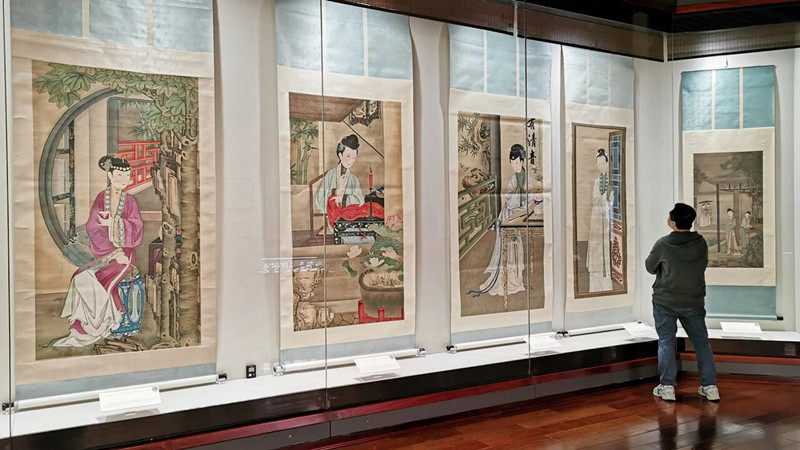
A visitor admires paintings at Shenzhen Museum’s ancient art division.
The “Galloping Glory” exhibition, running through March 22, 2026, presents 60 exquisite Tang Dynasty (618-907) artifacts, including sancai (three-color) glazed horses and wares, as well as painted pottery horses and figurines. The exhibition examines the central role of horses in Tang military affairs, the economy, sport, and entertainment, allowing visitors to appreciate China’s equestrian heritage and its historical depth.
“Starry Splendor on Clay” is a permanent exhibition featuring more than 100 painted-pottery works from Shenzhen Museum’s own collection. The exhibition brings together recent archaeological research and highlights the Yangshao, Majiayao, Zongri, Kayue, Xindian cultures, and the regionally distinctive Xiantouling culture of Shenzhen.
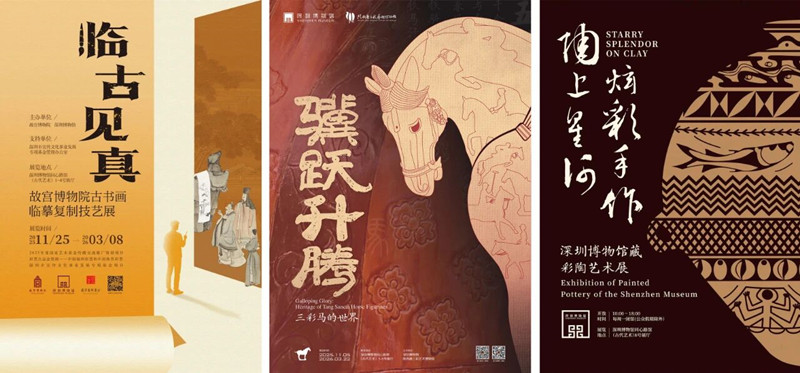
Posters of the three exhibitions at Shenzhen Museum’s ancient art division.
Tickets: Free
Venue: Shenzhen Museum’s ancient art division, Tongxin Road, Futian District 深圳博物馆同心路馆(古代艺术)
Metro: Line 9 to Hongling South Station (红岭南站), Exit A


