

share to:


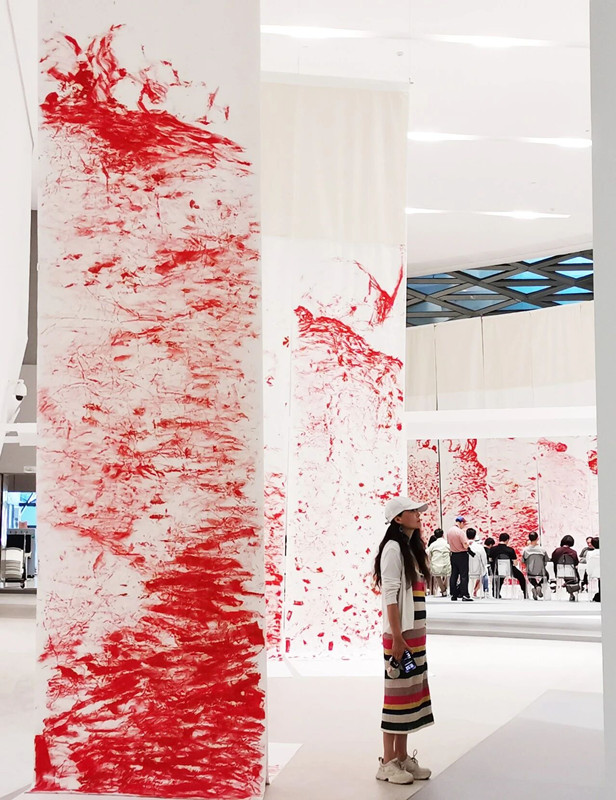
A visitor reads information about Yan Shanchun’s paintings, displayed behind her at the “Archaeology of Memory” exhibition at the Shenzhen Museum of Contemporary Art and Urban Planning. Photo by Cao Zhen
Standing in front of a painting by Yan Shanchun at the “Archaeology of Memory” exhibition, you may see almost nothing at first: a faint gray wash, or splashes of red or green, and a surface that breathes rather than depicts.
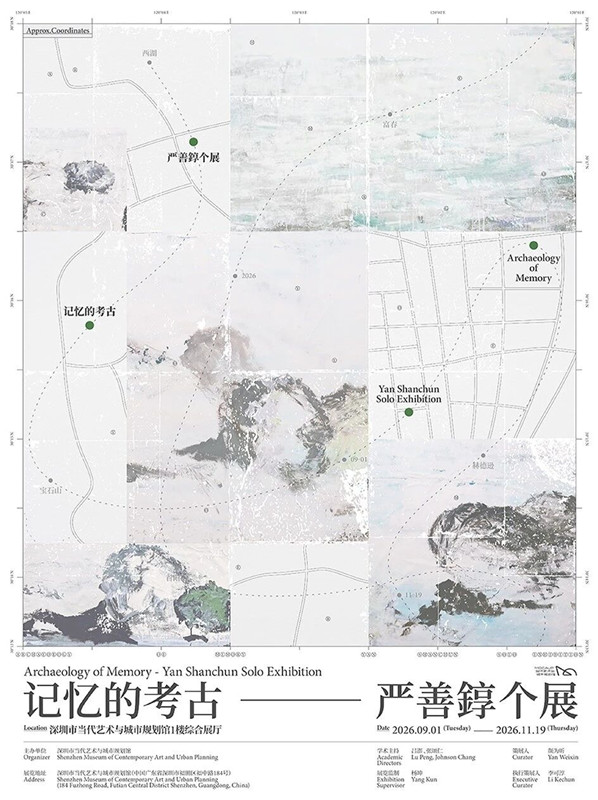
But you do not have to guess what you are looking at. The exhibition gives visitors a card and invites them to mark how they feel as they look at the paintings: cold, warm, hot, lonely, calm, or reminded of something personal.
There is no right answer.
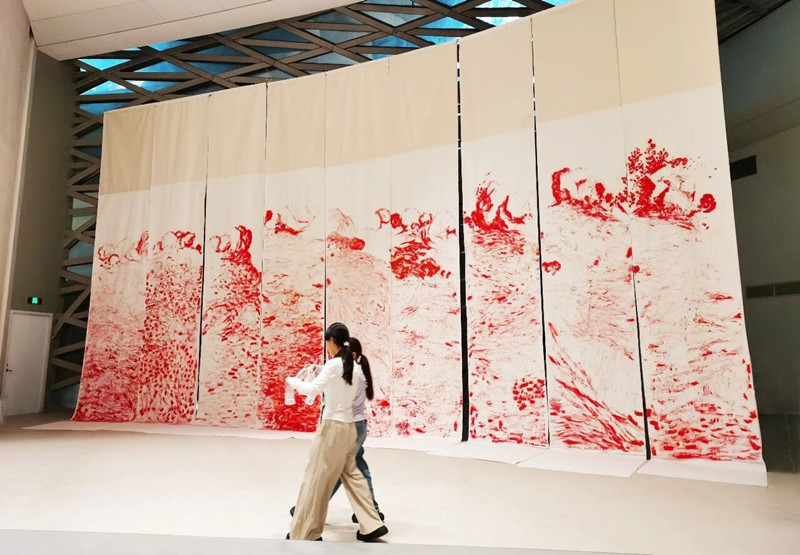
Visitors walk past Yan Shanchun’s paintings of Baoshi Mountain at the exhibition. Photo by Cao Zhen
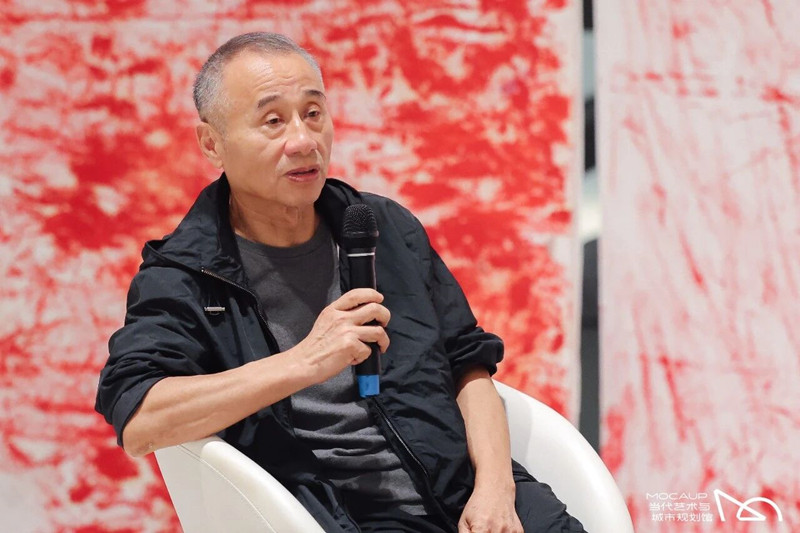
Yan Shanchun talks about his works at the exhibition yesterday. Photos courtesy of the organizers unless otherwise stated
The Hangzhou-born-and-raised artist is presenting more than 100 paintings, etchings, and archival materials. Centered on West Lake, Baoshi Mountain, and the Fuchun River in Hangzhou, as well as the Hudson River in the U.S., the works explore the relationship among memory, nature, and art.
Yan’s work revolves around specific places, but not the ones found in tourist photos. For him, a place is not simply a view, but a layered structure of history, images, personal experience, and imagination.
Think about it: what you remember of a place is rarely a complete picture. It may be a smell, a glimpse, a particular moment, or the feel of the earth beneath your feet.
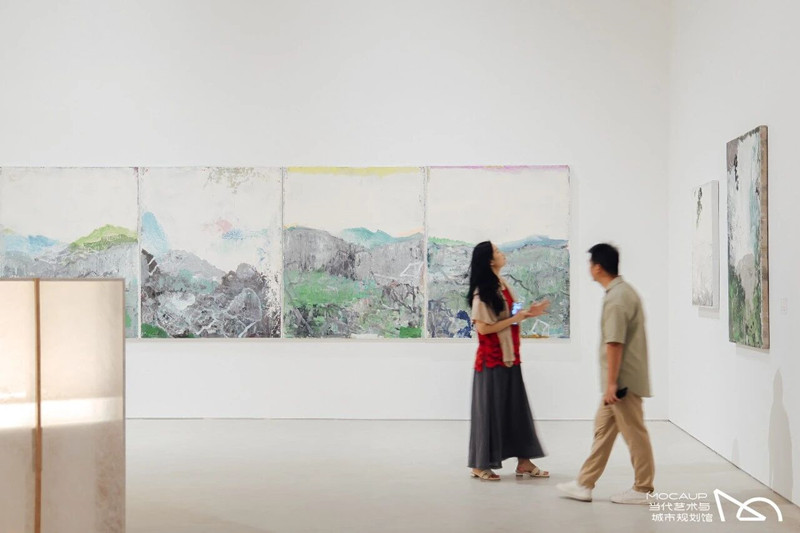
Visitors observe Yan Shanchun’s paintings at the exhibition.
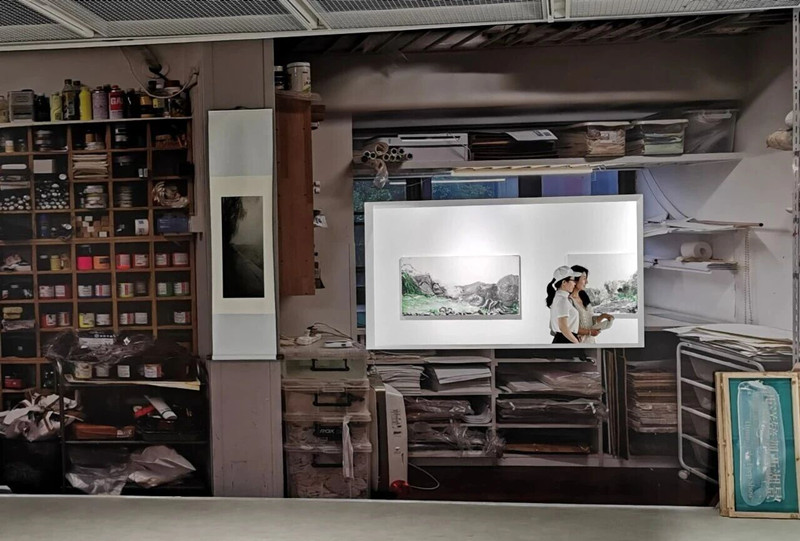
Visitors seen through the window of a room designed to resemble a painting studio. Photo by Cao Zhen
At the exhibition, Yan’s paintings of Baoshi Mountain are among the most visually striking. Most are large vertical scrolls, their images unfolding in red and possessing a profound warmth reminiscent of red seal ink. Yan brings the expressive qualities of Chinese brushwork into his choice of materials, colors, and compositions.
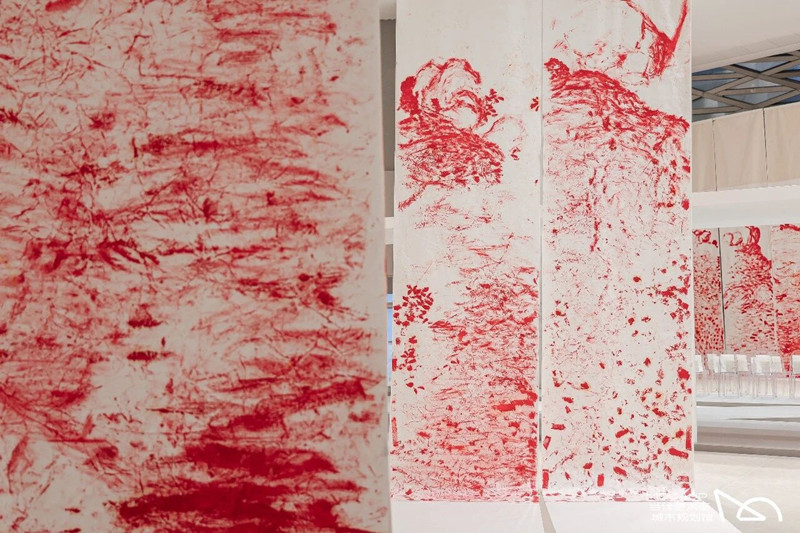
Yan Shanchun’s paintings of Baoshi Mountain.
West Lake has been painted for centuries. It is not merely a natural site, but also a cultural landscape. Yan does not depict its iconic scenes. Instead, his paintings convey a faint, damp sensation rooted in bodily experience — including childhood memories of summer swimming and of his hands turning red in the freezing cold of winter — as well as in material experimentation. Through these works, he reassembles a landscape of memory.
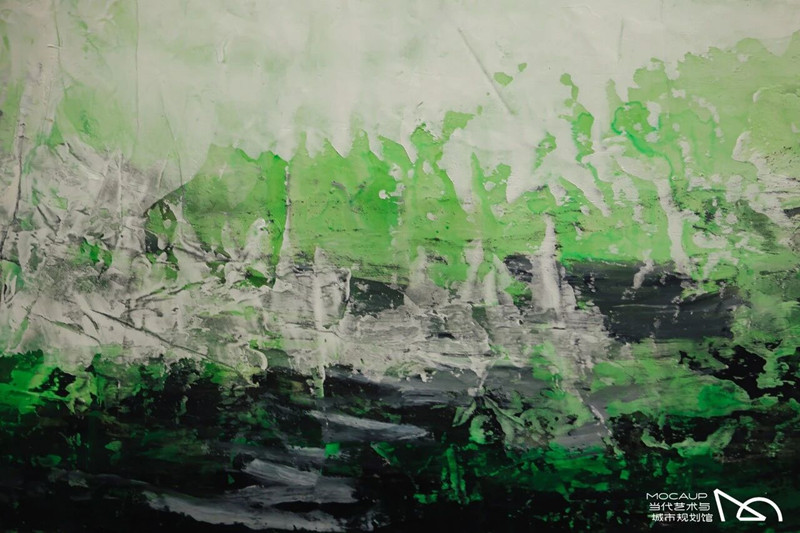
Detail of a West Lake painting by Yan Shanchun.
The Fuchun River is known around the world through Huang Gongwang’s literati painting “Dwelling in the Fuchun Mountains,” created in 1350. Huang depicted the river as serene and unrestrained, while Yan remembers cracked earth and slippery moss. Using plaster powder, pigment, and paper to build up layered textures, Yan paints the expansive river and muddy soil.
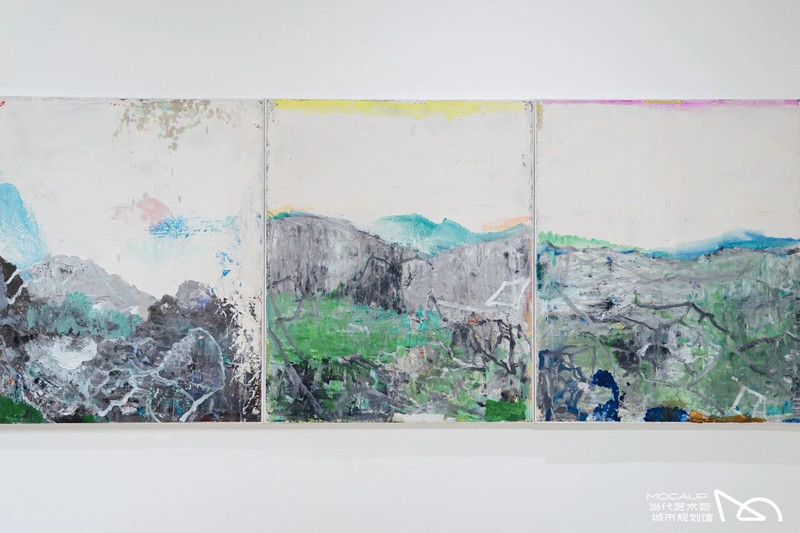
Yan Shanchun’s Fuchun paintings.
If West Lake, Baoshi Mountain, and the Fuchun River emerge from Yan’s bodily memories, the Hudson River represents something different: an imagined landscape. Yan said his Hudson River paintings were inspired by the Hudson River School, a group of mid-19th-century American artists who shared an interest in landscape painting.
In these works, Yan paints Western landscape through the lens of Chinese literati painting. Light, space, and the sublime in Western painting meet Chinese brushwork in his depictions of wilderness, trees, and distant mountains.
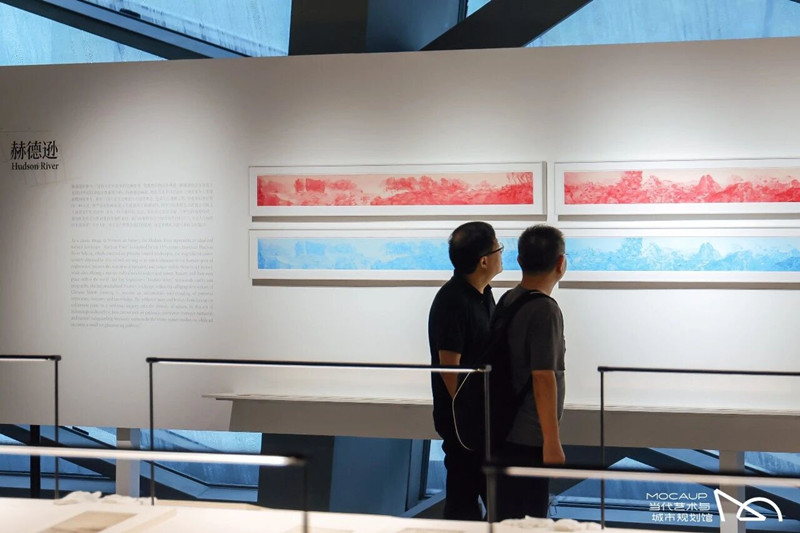
Visitors admire Yan Shanchun’s Hudson River paintings.
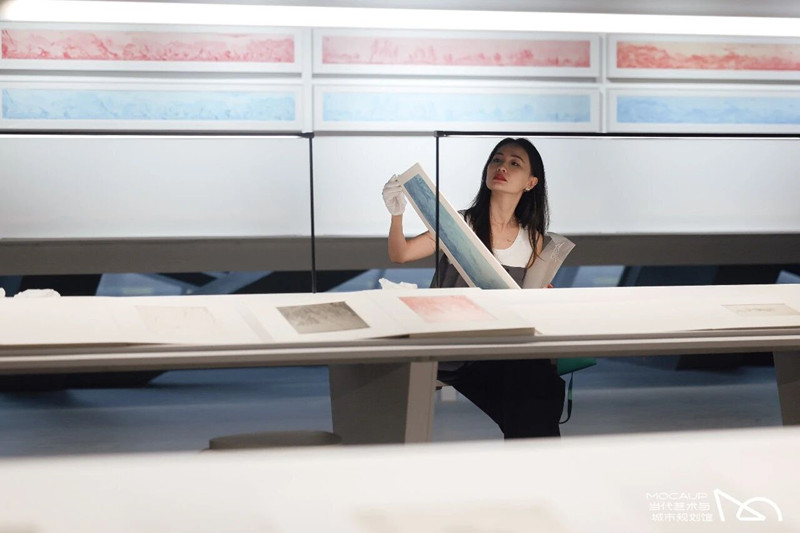
A visitor observes paintings at the exhibition.
The exhibition also includes a space displaying Yan’s personal objects, photographs, books, manuscripts, and letters. Another area invites visitors to sit down and view the paintings closely and at their leisure.
Yan previously worked as a researcher and deputy head of the Shenzhen Fine Art Institute. The exhibition is part of the Shenzhen Museum of Contemporary Art and Urban Planning’s “Shenzhen Time: Shenzhen Artists Series,” which systematically traces the creative journeys of local contemporary artists, preserves artistic archives, and contributes to a contemporary art history narrative for the city.
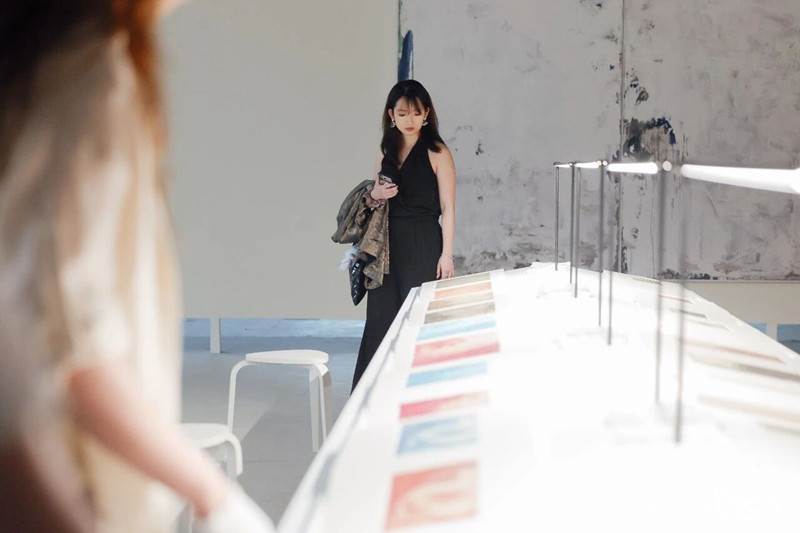
Visitors observe paintings at the exhibition.
Dates: Through Nov. 19
Hours: 10 a.m.-6 p.m., closed Mondays
Tickets: 42 yuan (various discounts available)
Venue: Shenzhen Museum of Contemporary Art and Urban Planning, Futian District 深圳市当代艺术与城市规划馆
Metro: Line 3 or 4 to Children’s Palace Station (少年宫站), Exit A2


