

share to:


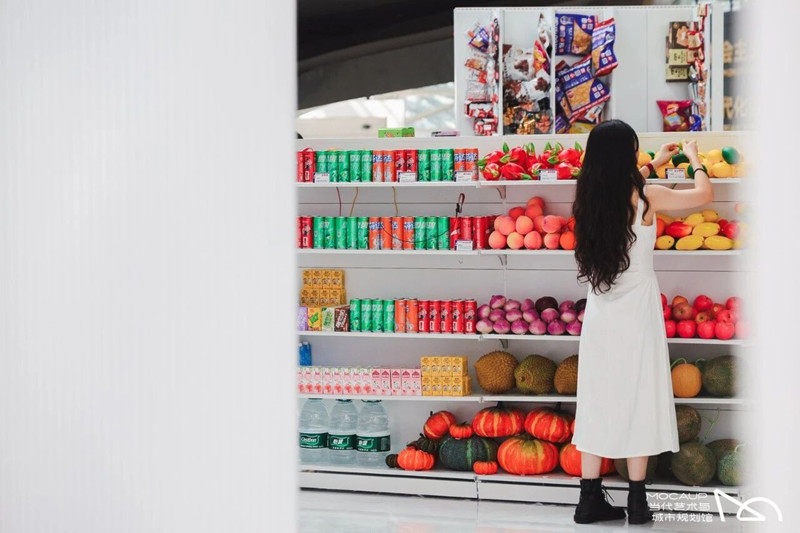
A visitor is interested in Liu Di’s artwork “25 Hours” at the “Urban Polyphony” exhibition at the Shenzhen Museum of Contemporary Art and Urban Planning. Photos courtesy of the organizers unless otherwise stated
Pick up a canned drink or an orange, and you may hear the familiar chime of automatic doors or beep of a barcode scanner — everyday sounds of convenience stores. In artist Liu Di’s interactive installation “25 Hours,” these sounds prompt reflection on how the conveniences we take for granted can distance us from our surroundings and quietly reshape the way we live.
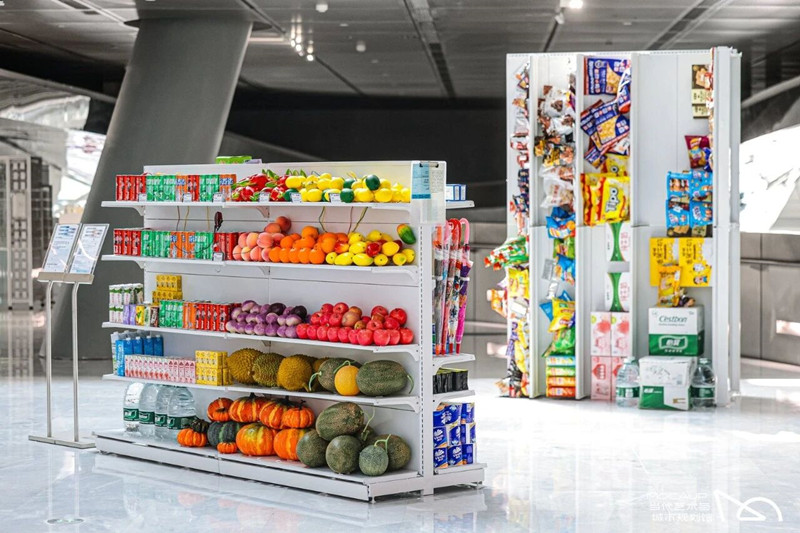
Liu Di’s “25 Hours.”
The work is on view at “Urban Polyphony: Shenzhen Time Contemporary Art Exhibition” at the Shenzhen Museum of Contemporary Art and Urban Planning (MOCAUP). Some other exhibits are also interactive, inviting visitors to engage with the artworks and their own memories of the city.
Shenzhen sound artist and musician Zen Lu invites visitors to open an old mailbox, watch a video and listen to sounds he recorded in Baishizhou, one of Shenzhen’s largest urban villages. Lu has been making field recordings there since 2012, using sound to trace Baishizhou’s transformation.
Lu sees sound as a way to understand the world. He said that the work “Farewell, Baishizhou,” featuring videos co-created with Zhao Fei, is not a farewell so much as an exploration of how collective memories endure amid urban transformation.
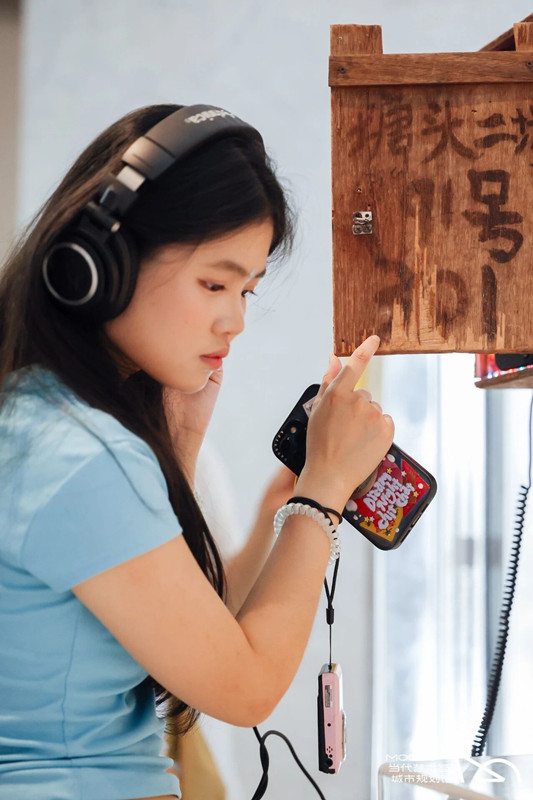
A visitor listens to “Farewell, Baishizhou.”
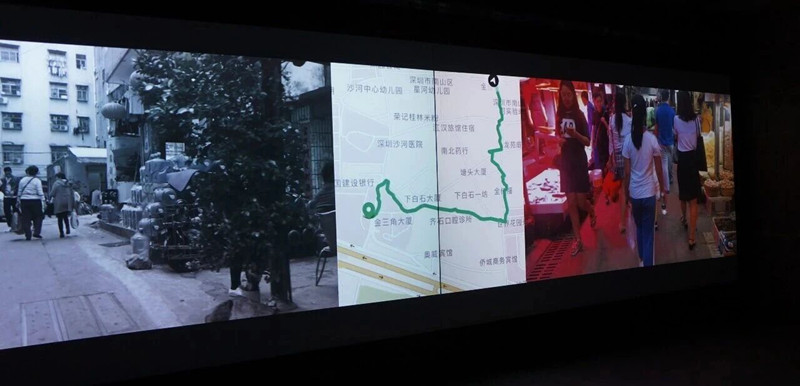
Scenes from “Farewell, Baishizhou.”
The exhibition brings together works by 27 artists and groups, pairing personal memories with urban archives. It builds on MOCAUP’s “Shenzhen Time” oral history project, which records interviews with local artists and cultural industry insiders.
The exhibition takes “polyphony,” a musical concept, as a way to study the city. Drawing on anthropology, it places artworks within their social relationships and historical contexts. Through oral histories and archival research, the exhibition offers a systematic look at Shenzhen’s urban culture and contemporary art scene.
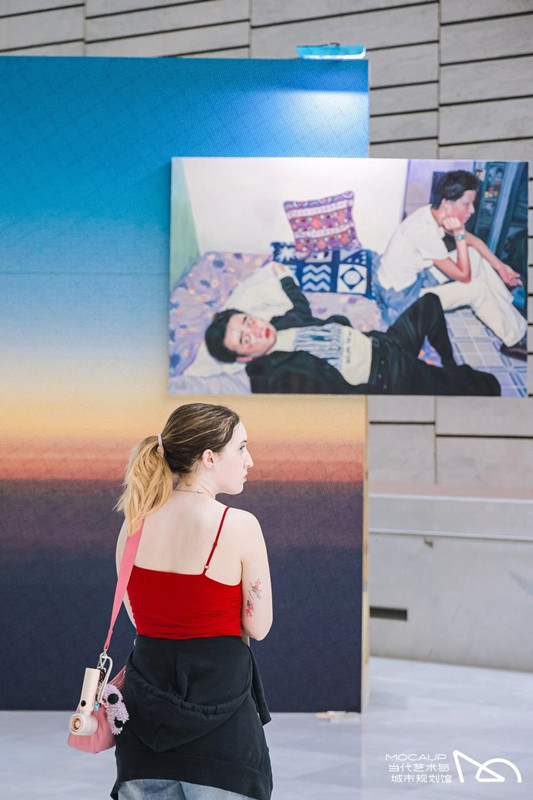
A visitor stands in front of Yang Yong’s oil painting “Time Mailbox.”
Some exhibits reflect the artists’ experiences of life in Shenzhen: memories of growing up in Dafen Village, working in the city’s factories, and observing its climate and vegetation over time. Bringing these lived experiences into the gallery, the exhibition invites visitors to rediscover urban change through many different “voices.”
A scene from Jiang Zhi’s video series “A Few Human Minutes.” The artist captures moments of Shenzhen residents amid the city’s rapid development. Photo by Lin Songtao
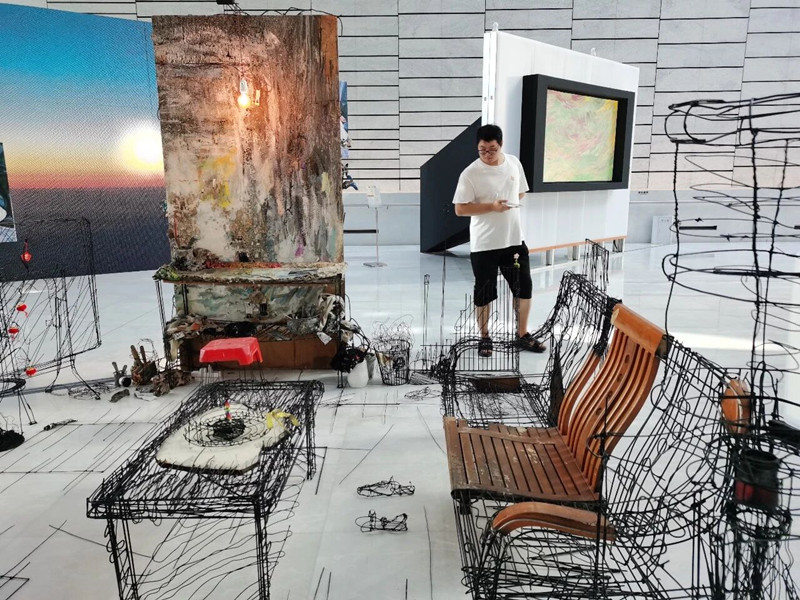
A visitor observes Wu Yuze’s “No. 7 Laowei West 1st Lane, Dafen,” inspired by the artist’s childhood experience in Dafen Village. Photo by Cao Zhen
As visitors step into “Shenzhen Time,” they and the artists are invited to consider a question: How can a city shaped by migration use art and oral history to preserve the experiences of its residents? Here, “Shenzhen Time” is more than a chronology. It is a living, changing present shaped by artistic practice, urban renewal, labor and everyday life.
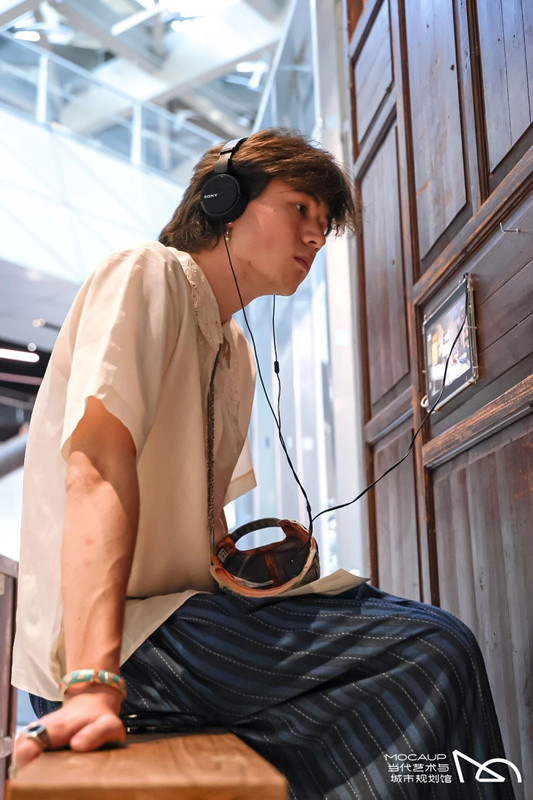
A visitor listens to a work at the exhibition.
At the entrance, visitors can draw a card featuring a fragment of an artist’s life, then look for the corresponding work in the exhibition. In the archive section at the end, they can learn more about the artist through an oral history.
Visitors can also write down their own memories or hopes for Shenzhen on sticky notes and exchange them for an artist’s paper archive, becoming storytellers and participants in the exhibition.
Launched in 2020, the “Shenzhen Time” exhibition series is a signature event focused on local culture and contemporary art. The first edition traced more than 40 years of Shenzhen contemporary art through institutional collections and works by local artists. The current exhibition builds on that research by turning to individual experiences and making “Shenzhen Time” a dynamic narrative — one that is continually revisited and rewritten.
Dates: Through Dec. 13
Hours: 10 a.m.-6 p.m., closed Mondays
Tickets: Free
Venue: Shenzhen Museum of Contemporary Art and Urban Planning, Futian District 深圳市当代艺术与城市规划馆
Metro: Line 3 or 4 to Children’s Palace Station (少年宫站), Exit A2


