

share to:


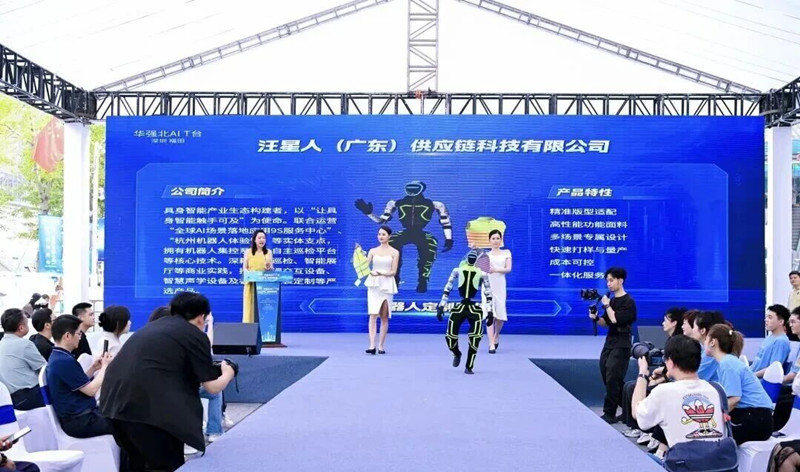
A humanoid robot developed by Wangxing Robot walks on a T-stage during a ceremony unveiling Huaqiangbei’s latest list of top-selling AI devices in Futian District yesterday. Photos by Shenzhen Special Zone Daily unless otherwise stated
Huaqiangbei, one of the world’s largest electronics markets, has released a new list of top-selling artificial intelligence devices, underscoring growing global demand for consumer AI products and the district’s role as a rapid commercialization hub.
The latest ranking — part of what organizers call the “AI Eight Steeds” — is based on market performance and, according to organizers, reflects products “voted for by global buyers with their wallets.”
The list spans eight categories of consumer AI devices, including smart glasses, robots, drones, monitoring cameras, translation-enabled headphones, pocket cameras, AI-powered musical instruments and study tablets. Many of the products are already available in Huaqiangbei’s sprawling network of electronics malls and online platforms, often at competitive prices.
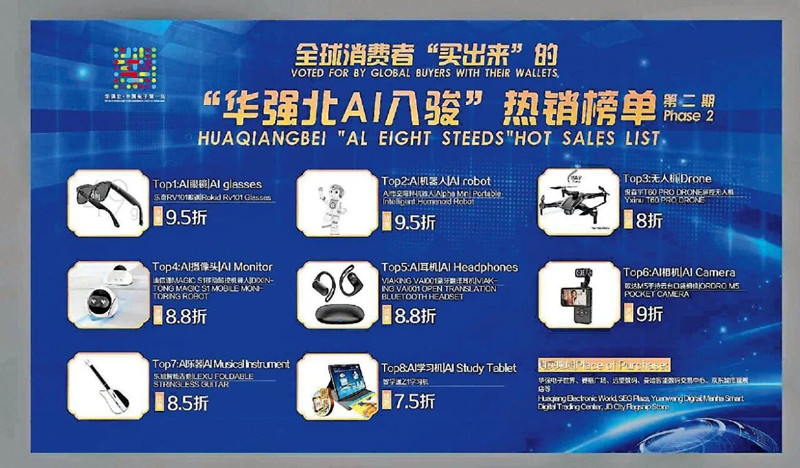
A graphic displays Huaqiangbei’s latest list of top-selling AI consumer products described by organizers as “voted for by global buyers.” Courtesy of event organizer
Known for its dense concentration of suppliers and manufacturers, Huaqiangbei enables companies to move from design to prototype within hours and to mass production within days — a speed that has made it a key destination for international buyers, developers and startups seeking to test and scale products quickly.
Sales data underscores the momentum. Since the first version of the ranking was released, overall sales in related categories have risen 35% year on year, with products such as drones and AI glasses recording growth of up to 90%, according to local officials.
At an industry event held yesterday, companies showcased a range of new and experimental technologies alongside the ranking, including holographic display systems, health diagnostics tools and brainwave-interaction devices, reflecting the breadth of Shenzhen’s fast-evolving AI ecosystem.
One product drawing attention was a mobile monitoring robot developed by Chinese retailer D.Phone. The device can be remotely controlled via smartphone, navigate autonomously between rooms, support two-way voice communication and return to its charging station automatically.
“Huaqiangbei is where products are tested by the global market in real time,” said Lin Peng, a vice president at D.Phone, adding that the robot has attracted both domestic and overseas buyers since its launch earlier this year.
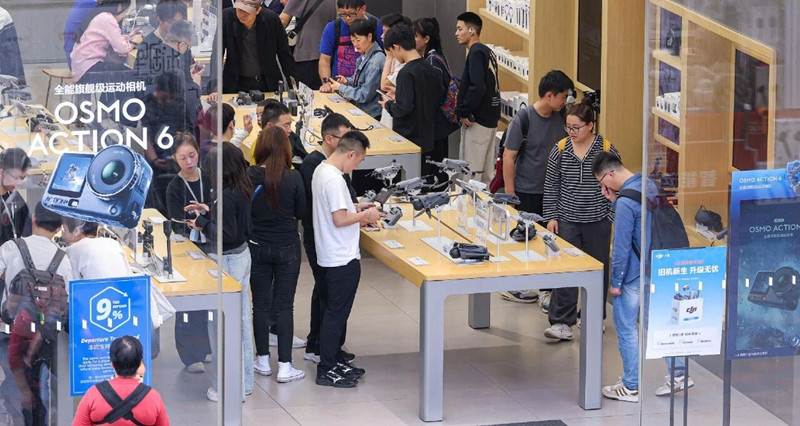
Shoppers browse drones and cameras at an electronics store in Huaqiangbei, a major hub for consumer tech and global sourcing.
For visitors, many of these products can be found in major electronics malls such as SEG Plaza and Huaqiang Electronic World, long regarded as key sourcing destinations for international traders and tech enthusiasts.
Local authorities are also expanding support for startups through a network of low-cost workspaces, business services and development tools, aimed at lowering barriers to entry and accelerating commercialization.
Officials say they plan to make such rankings and showcase events a regular platform for product launches, encouraging companies to refine products based on market feedback and scale quickly to global markets.


