

share to:



A poster inviting entries from around the world for the third Better Design Award.
The third Better Design Award (BDA) opened for worldwide submissions on Oct. 8, launching an expanded competition that organizers say will evolve from a stand-alone contest into a platform linking design, manufacturing, investment, and marketing.
The award, held under the guidance of China Media Group and the governments of Guangdong Province, Guangzhou, and Shenzhen, offers a total prize pool of 4.1 million yuan (US$611,700) across 326 awards this year.
Entries are open to companies, design firms, universities, research teams, and individuals worldwide and can be submitted through the award’s official website until Dec. 12.
First held in 2024, the award has drawn more than 22,000 entries from 69 countries and regions over its first two editions, according to organizers. Its awards ceremony is broadcast on China Media Group’s finance and international channels, with cumulative online and broadcast viewership exceeding 1.2 billion, the organizers said.
For its 2026 edition, the competition will add permanent incubation and acceleration programs that connect investors, supply chains, and market channels, offering selected projects support with product refinement, production guidance, and financing support. Winning projects will also be promoted at the Canton Fair and the China International Small and Medium Enterprises Fair, and overseas design experience centers will be set up to help Chinese products expand into foreign markets, organizers said.
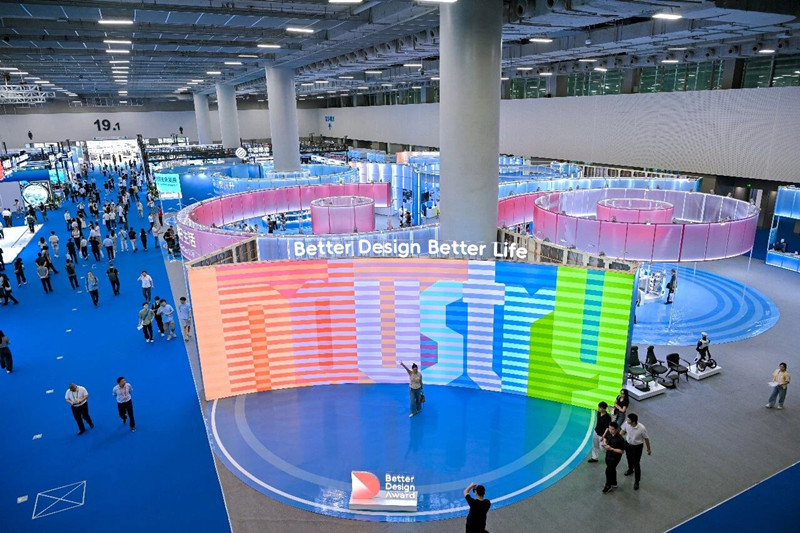
Award-winning designs from the Better Design Award competition are showcased at the 21st China International Small and Medium Enterprises Fair in Guangzhou in September. Photos courtesy of event organizer
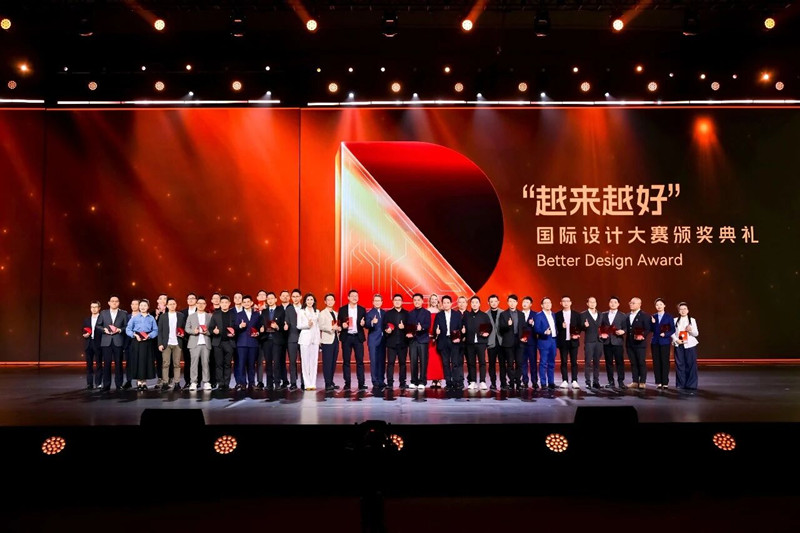
Participants pose for a group photo at the second Better Design Award ceremony in 2025.
The award has restructured its categories into two tracks: product design and design for industry. The product track is divided into industrial foundation, better life, and future design groups, covering commercial equipment, public facilities, consumer products, and concepts not yet in production, with separate categories for professional designers, students, and startup teams. The design for industry track moves beyond individual products to accept supply chain solutions, new producer-service models, and foundational design research projects.
Wang Min, a professor at the Central Academy of Fine Arts, and Pradyumna Vyas, president of the World Design Organization, will serve as co-presidents of the jury, representing Chinese and international jurors, respectively. The jury also includes design scholars, veteran jurors from international competitions, and experts from manufacturing, investment, business incubation, and branding.
Organizers said the changes are intended to move the award beyond recognition of finished work toward helping promising designs reach production and global markets.


