

share to:


Video by Shenzhen Daily staff
Emilio de Miguel Calabia, Consul General of Spain in Guangzhou, visited Shenzhen with 50 faculty and students from Esade Business School as part of the “APEC·Consular Nature Shenzhen Tour” series April 28.
To fulfill Shenzhen’s responsibilities as the host city of the 2026 APEC meeting and further expand its high-level international openness, the Shenzhen Municipal Urban Planning and Natural Resources Bureau, together with the Foreign Affairs Office of the Shenzhen Municipal People’s Government, the International Mangrove Center, the Futian Mangrove Nature Reserve, the Shenzhen Center for Design, and the Shenzhen Foundation for International Exchange and Cooperation, organized the tour series.
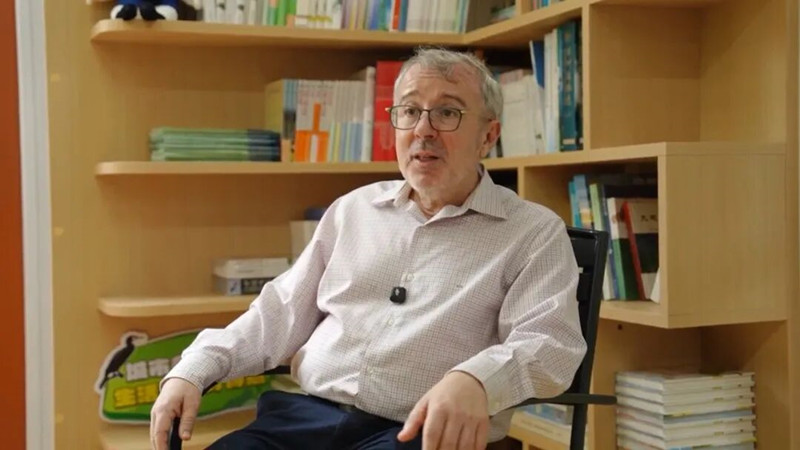
Emilio de Miguel Calabia, Consul General of Spain in Guangzhou, speaks during an interview with Shenzhen Daily. Photos by Qiu Weibin, Zhen Jianhong
Using the Urban Index of Shenzhen (UIS) as a platform, the activities aim to broaden international cooperation in smart city governance and ecological protection.
Emilio first visited the Shenzhen Contemporary Art and Urban Planning Museum, gaining a comprehensive understanding of Shenzhen’s transformation from a special economic zone into an international innovation hub. Through detailed exhibits and urban transformation imagery, he observed Shenzhen’s urban achievements, spatial governance progress, and future development plans, experiencing the city’s openness, vitality, and its strategy to enhance comprehensive competitiveness under the UIS framework.
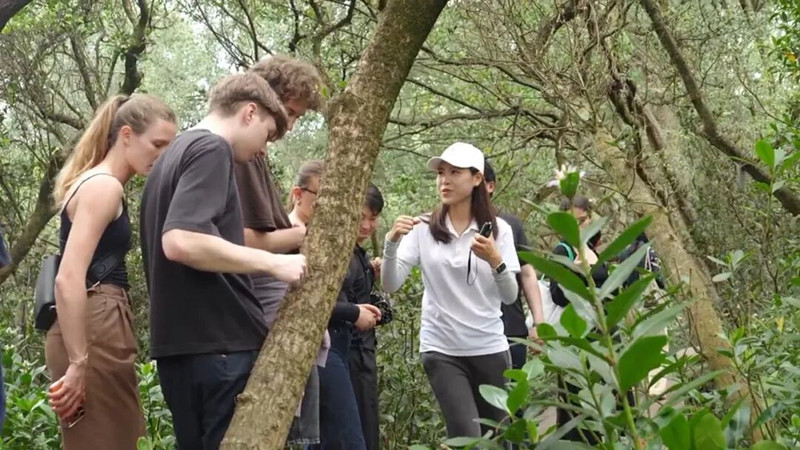
Students from Esade Business School observe plants at the Futian Mangrove Nature Reserve.
In the afternoon, the delegation, including Esade students, foreign staff from the International Mangrove Center, and representatives of the APEC Youth Pioneer Team on Forestry, visited the Shenzhen Laboratory for Smart Territorial and Spatial Governance, the Themed Exhibition of the International Mangrove Center, and the Futian Mangrove Nature Reserve.
Shenzhen’s holistic, full-cycle smart spatial management allowed the group to witness firsthand the technological sophistication and precision of the city’s governance, highlighting the key role of planning in high-quality urban development and ecological security. The visit also underscored Shenzhen’s leadership in smart governance and green development within the UIS framework.
The delegation gained insight into Shenzhen’s integrated approach to balancing urban development with ecological protection, safeguarding the city’s “urban lungs.”
Emilio held discussions with local ecology and urban planning experts, foreign staff, and students, focusing on the UIS, APEC green cooperation, and ecological restoration. Experts explained that UIS is a global urban governance tool that functions like a sextant, compass, and dashboard, helping cities define their position, adjust direction, and implement strategic plans.
At the Futian Mangrove Nature Reserve, participants explored mangrove habitats and migratory bird areas along the wetland boardwalk. The vibrant wetlands and harmonious interaction between humans and nature showcased Shenzhen’s achievements in ecological restoration and urban sustainability, highlighting the city’s livable and environmentally conscious qualities under UIS development.
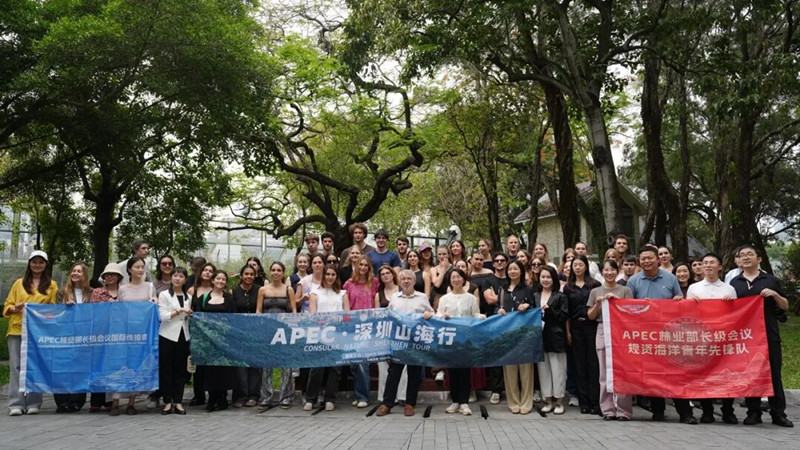
Participants pose for a group photo at the Futian Mangrove Nature Reserve.
"I am impressed by how nature is preserved within a bustling city — this is rare to see. The innovation here is remarkable. Understanding each other better is essential, and students with open minds are a great way to achieve this. They are eager to learn and will shape the future of relations between Spain and China," said Emilio.
In the future, the series will continue, inviting people from APEC economies and consulates in Guangzhou to visit Shenzhen’s smart planning, ecological restoration, marine technology, and industrial innovation projects. The series aims to showcase Shenzhen’s mountain-sea urban landscape and smart governance, foster dialogue and cooperation among APEC economies, and promote high-quality, regionally coordinated green development.


