

share to:


Video and photos by Zhen Jianhong
A delegation led by Eduardo Pedrosa, executive director of the APEC Secretariat, visited Qianhai on May 5.
During the tour, the delegation was impressed not only by the accessibility and practicality of Qianhai’s sci-tech innovations, but also by the deeper strategy driving its innovation ecosystem: the ability to draw global talent through “people-to-people connectivity,” which serves as a sustained source of momentum for regional collaborative innovation.
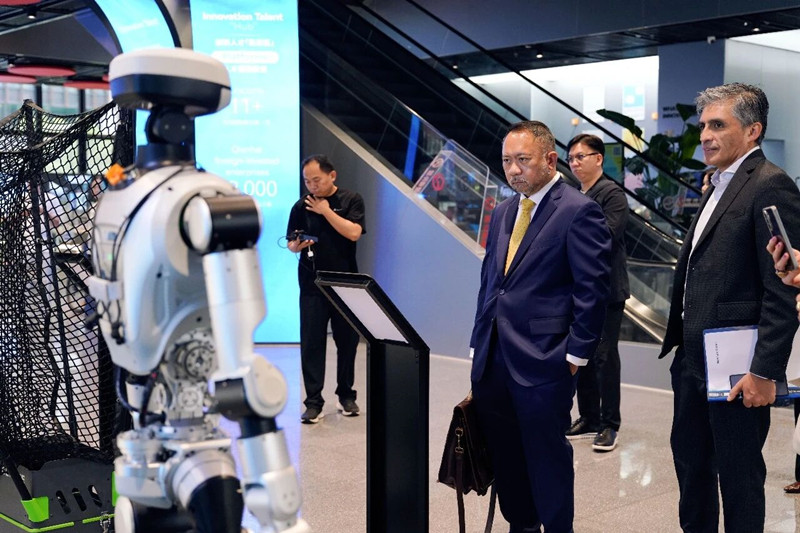
Eduardo Pedrosa (C), executive director of the APEC Secretariat, observes a humanoid robot during a visit to Qianhai’s frontier technology exhibition in Shenzhen.
The delegation’s visit started at the frontier tech exhibition at Qianhai Block V, where language barriers were instantly dissolved through AI-powered translation earbuds provided by Shenzhen Timekettle Technology Co.
Equipped with the seamless communication tool, the group engaged in an in-depth exploration of more than a dozen pioneering innovations from companies in Nanshan and the Qianhai Cooperation Zone. From vivid 3D visuals brought to life through AI glasses to naked-eye 3D displays, the immersive experience won high praise from the delegation.
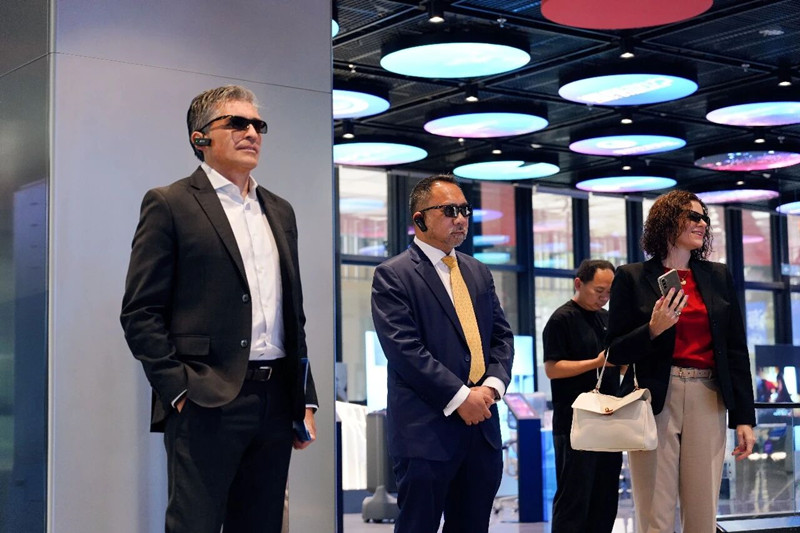
Members of an APEC Secretariat delegation test AI-powered smart glasses during a visit to the frontier technology exhibition at Qianhai Block V in Shenzhen on May 5.
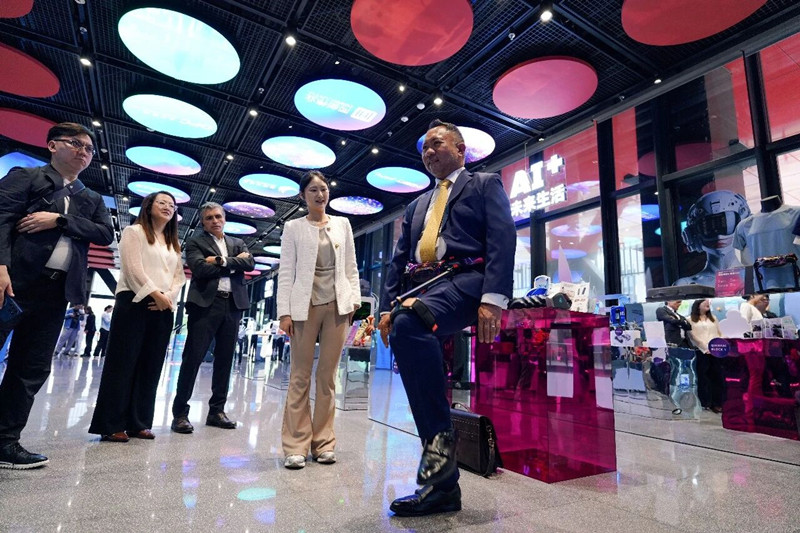
Eduardo Pedrosa tests a wearable robotic exoskeleton during a visit to the frontier technology exhibition at Qianhai Block V in Shenzhen.
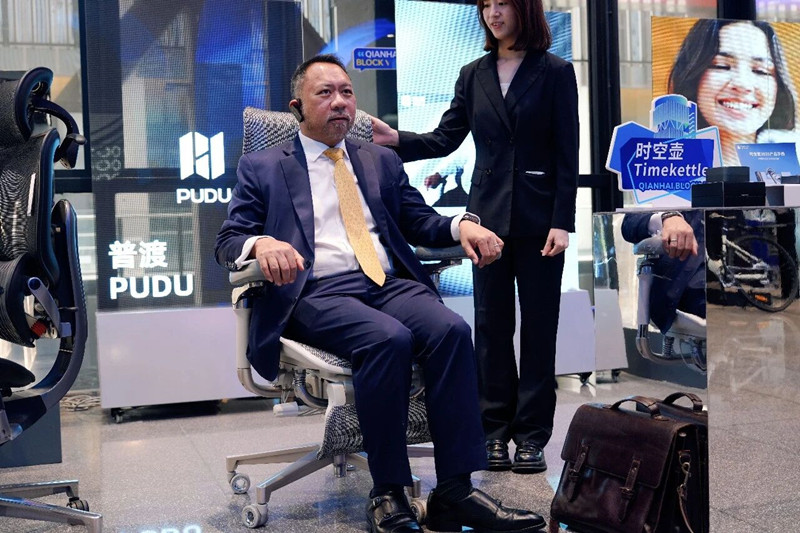
Eduardo Pedrosa (L), executive director of the APEC Secretariat, tests an ergonomic chair by Shenzhen-based company Sihoo Technology during a visit to Qianhai.
In addition to visual innovations, the delegation’s attention shifted toward the "practical innovation" designed to enhance daily life. At the Sihoo Technology booth, several members were drawn to an ergonomic chair featuring multi-angle adjustments, eager to test its comfort. The atmosphere turned lighthearted as Pedrosa joked, “This is far more comfortable than my office chair.” Fernando Salas, director of Communications and Public Affairs at the APEC Secretariat, joined in the praise, quipping, “It’s impossible to work in it (because it is so comfortable).”
While testing SenseTime’s AI chess robot, Pedrosa playfully suggested the development of a mahjong-playing version. These interactive experiences left a lasting impression on the delegation: Qianhai’s hard tech is becoming increasingly user-friendly, entertaining, and deeply integrated into everyday life.
Later, Pedrosa sat for an exclusive interview with Shenzhen Daily at the International Media Studio in Qianhai Block V. When asked about the lessons that could be learned from the innovation ecosystems of Nanshan and Qianhai, Pedrosa referenced APEC’s three pillars of connectivity.
“Physical connectivity focuses on infrastructure, while institutional connectivity is about how our regulations can work together. But through today’s tour in Qianhai, I felt that people-to-people connectivity is really crucial,” Pedrosa said.
He noted that engineers, designers, architects, and other professionals exchanging ideas within the same innovation hub are what bring talent together and spark creativity and inspiration.
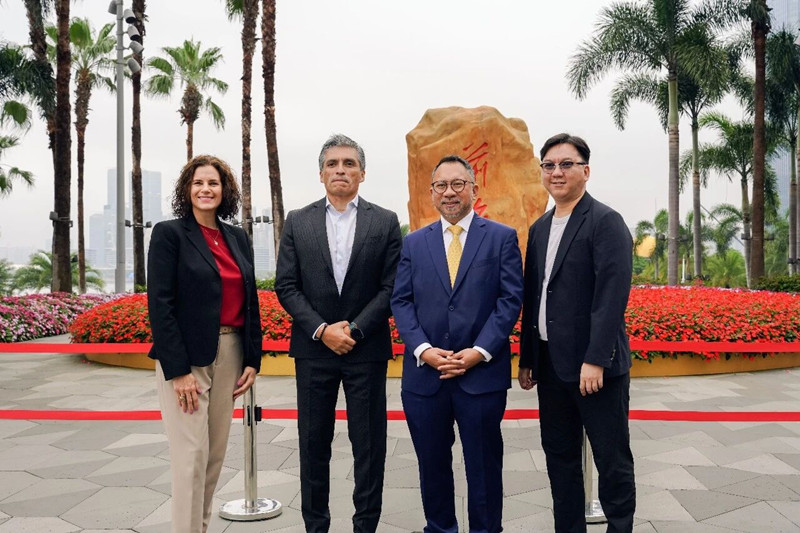
Members of an APEC Secretariat delegation pose for a photo at the Qianhai Stone Park during the visit.
This November, Shenzhen will host the 33rd APEC Economic Leaders’ Meeting. “At that time, the world’s attention will be focused here, and people will have the opportunity to see Shenzhen’s achievements firsthand and draw inspiration from them,” Pedrosa said.
During the visit, the delegation also went to the Qianhai Stone Park and OH Bay. In the lush coastal setting, they further experienced the distinctive urban appeal of Qianhai, where a high-quality ecological environment blends seam


