

share to:


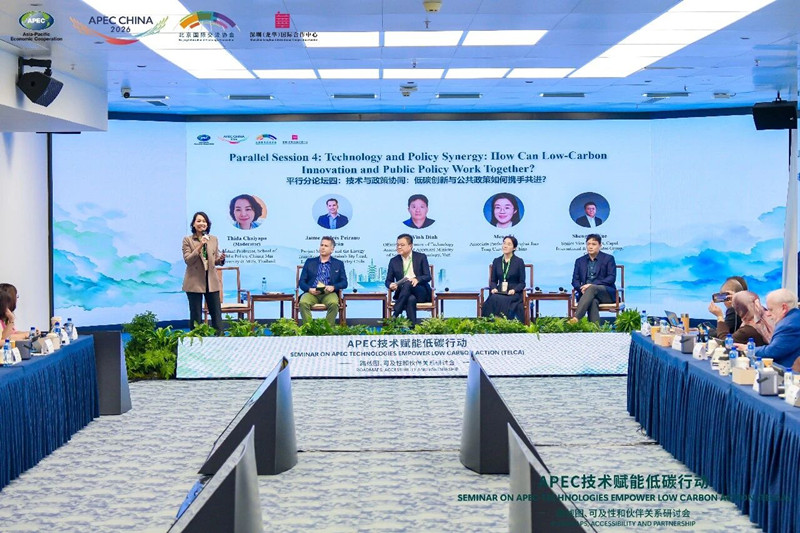
Participants attend the parallel session "Technology and Policy Synergy: How Can Low-Carbon Innovation and Public Policy Work Together?" on Sept. 4. Courtesy of LICC
Bridging the gap between technological innovation and public policy emerged as a key theme at the Seminar on APEC Technologies Empower Low-Carbon Action (TELCA): Roadmaps, Accessibility and Partnership, held in Longhua District from Sept. 2 to 4.
Some participants said closer coordination among policymakers, technical experts and industry is essential to turning low-carbon technologies into practical solutions.
Jaime Andrés Peirano Ocharán, project manager and energy transition and sustainability lead for the Low Carbon Unit at Worley Chile, said policymakers sometimes struggle to fully understand the potential of new technologies, while technical experts may overlook the practical constraints of policy implementation.
“The gap between the two is wider than we imagine,” he said.
Peirano added that bridging the divide between technology and policy and establishing more effective dialogue are crucial to facilitating the deployment of low-carbon technologies.
On the second day, participants held in-depth discussions on “Accessibility, Green Skills and Empowering Partnerships,” with six keynote speeches and three parallel sessions covering climate technology, the bioeconomy and policy support for low-carbon innovation.
Representatives from Chile, Vietnam, China and Thailand shared their experiences and lessons learned in designing low-carbon policy instruments.
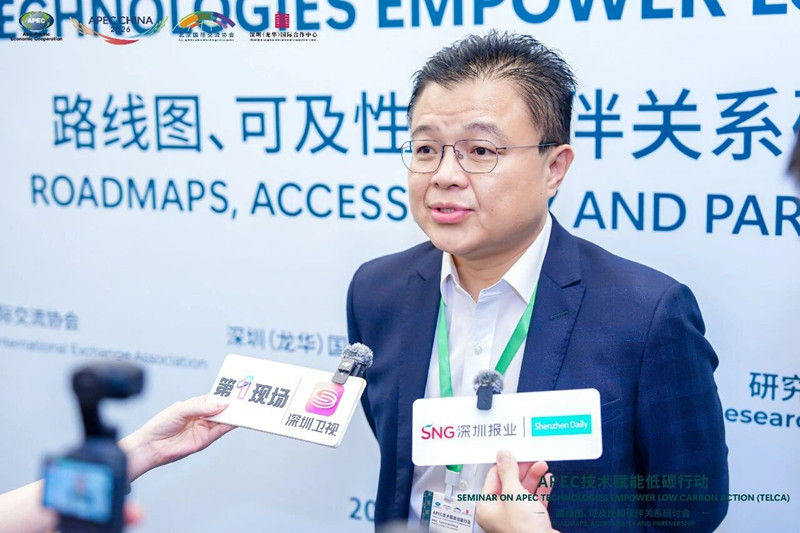
Xue Shengwei, senior vice president of Capol International & Associates Group, speaks to reporters during the seminar.
Xue Shengwei, senior vice president of Capol International & Associates Group, said cities can reduce transportation-related carbon emissions through better coordination between jobs and housing and by strengthening blue-green ecological systems.
He also recommended retrofitting existing industrial parks and aging residential communities to improve their low-carbon performance, and said overseas practices should be adapted to local conditions.
Xue said international cooperation should involve mutual learning, while collaboration among industry, academia, research institutions and end users is essential for validating successful practices through pilot projects.
The seminar’s parallel sessions also covered cost-sharing, rule-setting, capital allocation and coordination between technology and policy. Participants discussed ways to integrate gender equality, social inclusion, and monitoring and evaluation into the low-carbon transition.
Across the two-day discussions, participants explored how technological innovation, public policy and industrial practice could be better coordinated to support the real-world application of low-carbon technologies.


